Your front desk has a job. It’s just not “answer the phone forever.”
But that’s what happens in so many clinics. Calls keep coming. Messages pile up. Someone asks to move their appointment “to any time today” (love that for you). Walk-ins show up mid-conversation. Payments happen in the same tiny space where you’re trying to confirm names and birthdates. It’s chaos, but the quiet kind. The kind that looks normal until your team is exhausted.
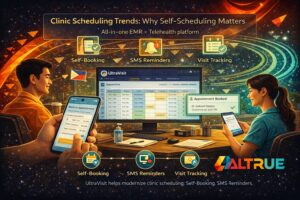
That’s why patient self-booking software is popping up more and more in clinic conversations. Not because it’s trendy. Because it removes the constant back-and-forth. It helps patients book without waiting on hold, and it gives your staff space to actually do front desk work instead of being stuck in appointment negotiations all day.
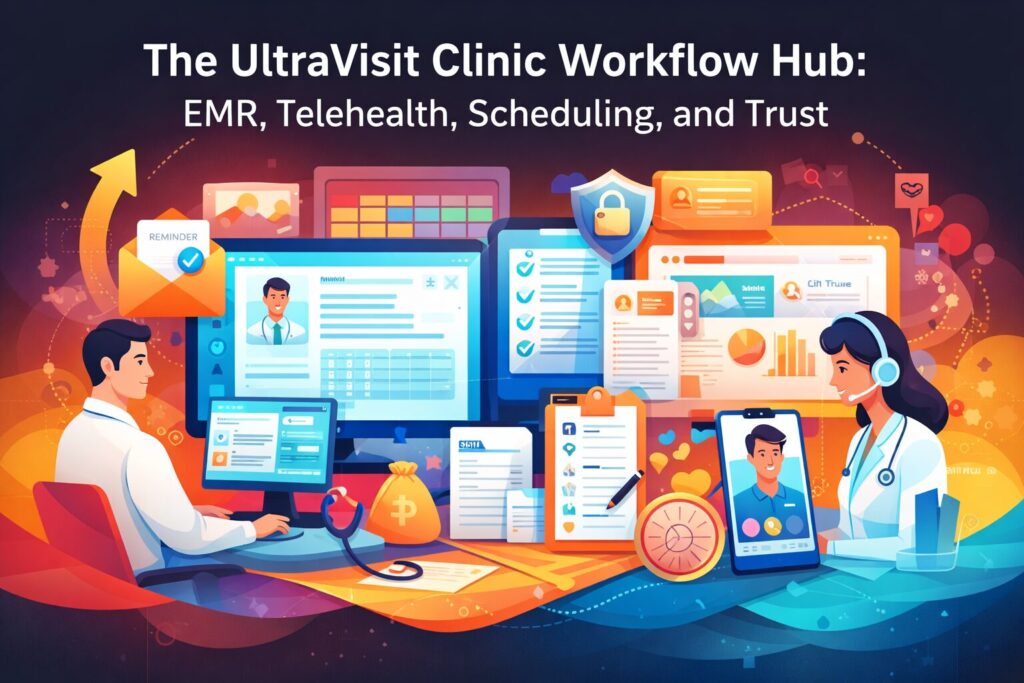
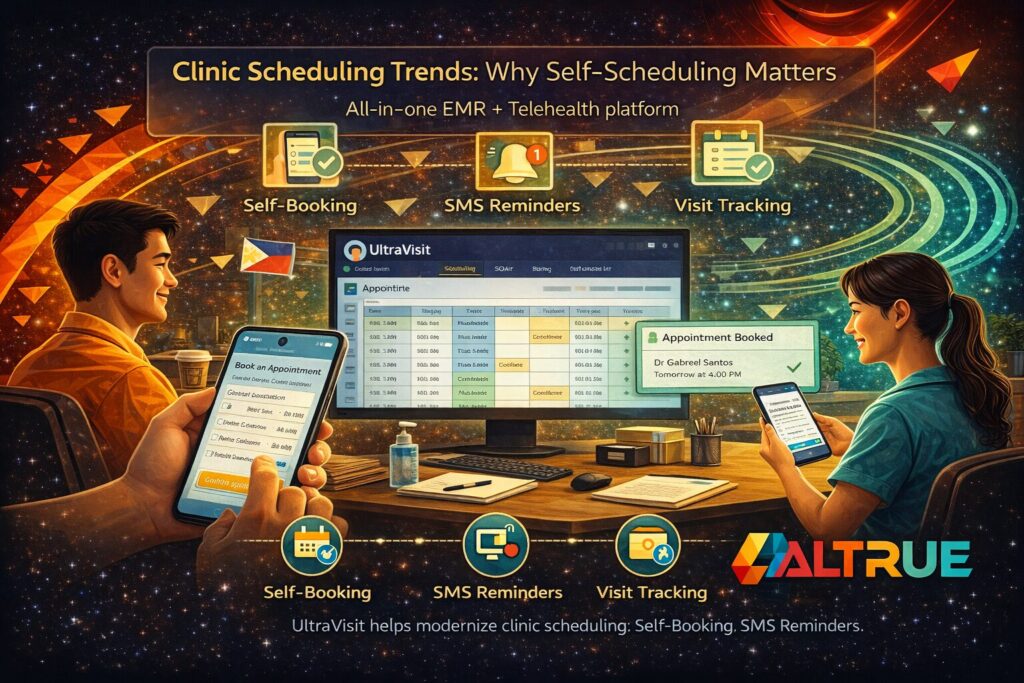
At ALTRUE, UltraVisit is positioned as a practical platform built around how clinics actually operate. It supports scheduling and patient profiles, faster documentation using SOAP notes, clinic tools like billing and receipts for cash based clinics, plus reports for visits and income. On the patient engagement side, UltraVisit supports self booking, reminders to reduce no shows, and follow up notes with repeat visit tracking, with telehealth support for follow-ups too.
So yes, self-booking matters. And no, you don’t need a “digital transformation speech” to see why.
Patient self-booking software: fewer bottlenecks, fewer interruptions
Self-booking isn’t about replacing your front desk. It’s about removing the repetitive parts that steal their time.
Because the bottlenecks are always the same:
- patients calling during peak hours
- booking details that are incomplete, so staff has to call back anyway
- last-minute reschedules that break the day’s flow
- staff stuck confirming appointments while patients are literally standing in front of them
With patient self-booking software, the patient can pick a slot without dragging your team into phone tag. It’s faster for the patient, and it lets your front desk breathe.
UltraVisit supports self booking for patients, which helps booking feel like a clean first step, not a daily wrestling match.
Online booking for clinics works best when it connects to patient profiles
Booking alone is not the problem. The problem is what happens after booking.
If you can’t quickly match the booking to the right patient and their context, staff still ends up asking the same questions repeatedly. The “online” part becomes just another layer, not a real fix.
UltraVisit supports scheduling and patient profiles, so patient info and appointment history are easier to locate. When the patient comes in, your team isn’t starting from scratch.
And honestly, anything that reduces “Wait, can you repeat that?” is a win. Small win, but it happens 50 times a day.
Self scheduling patients helps attendance when reminders do the follow-through
No-shows happen. People forget. Life changes. Traffic exists. Sometimes patients genuinely think they cancelled when they didn’t. (It happens.)
But self-booking does create one useful shift: the patient chose the slot themselves. That little bit of ownership can improve follow-through.
UltraVisit supports self booking and reminders to reduce no shows. That pairing matters because reminders are what keep a schedule from falling apart quietly.
Not perfect attendance. Just better odds.
Do patients actually like self booking for clinics
A lot of patients love it, especially the ones who hate phone calls or can’t call during work hours. Self-booking feels quicker and less awkward. No waiting on hold. No “Sorry, line is busy.” No “Can you call again later?”
UltraVisit supports self-booking as part of patient engagement, and pairs it with reminders and follow-up tracking so the clinic side stays organized too.
Clinic appointment booking should not create extra admin work
Here’s the trap: some systems let patients book online, but staff still has to copy the details into another log. That’s not efficiency. That’s double work dressed up as innovation.
UltraVisit is positioned as an integrated clinic workflow platform, so scheduling sits alongside documentation and operational tools, including:
- SOAP notes for encounter documentation
- prescriptions you can print and save for medication record keeping
- billing and receipts for cash based clinics
- reports for visits and income
So booking isn’t floating in its own universe. It connects to the actual clinic flow.
Self booking helps follow-ups, especially when telehealth is in the mix
Follow-ups are where schedules get messy. Patients want quick slots. Clinics want predictable pacing. And if telehealth follow-ups are part of your day, the scheduling load increases, not decreases.
UltraVisit supports telehealth follow-ups and includes tools that support follow-up continuity like follow up notes and repeat visit tracking. When patients can self-book, they can take action quickly instead of waiting for a call back. That matters when follow-ups are time-sensitive or when the patient is anxious and just wants reassurance.
And yes, anxious patients don’t want to “call back tomorrow.” They want clarity now. Fair.
What types of visits work well with online booking for clinics
Online booking tends to work well for:
- follow-up consultations
- routine check-ins
- scheduled visits that don’t require complicated triage
UltraVisit supports self-booking within a broader platform that also supports documentation and follow-up tracking, so the clinic doesn’t have to stitch things together afterward.
A quick view of what patient self-booking software changes
| Clinic Workflow | What Usually Happens | What UltraVisit Supports |
|---|---|---|
| Booking | phone tag and delays | self booking for patients |
| Attendance | forgotten appointments | reminders to reduce no shows |
| Continuity | follow-ups feel disconnected | follow up notes and repeat visit tracking |
It’s not flashy. It’s functional. And functional is what keeps clinics sane.
Privacy still matters because booking is still patient data
Booking includes personal details. And clinics handle sensitive information every day.
UltraVisit aligns with Philippine data privacy expectations under the Data Privacy Act of 2012 (RA 10173) and supports secure access controls for clinic teams. Patients may not ask about it directly, but privacy affects trust. And trust affects whether people return.
Quietly. Always.
The goal is a schedule that feels like a rhythm, not a rescue mission
Self-booking isn’t a gimmick. It’s a workflow lever.
It reduces front desk pressure, shortens booking time, supports steadier attendance when paired with reminders, and makes follow-ups easier to schedule, especially when telehealth is part of care delivery.
UltraVisit supports patient self-booking for clinics as part of an integrated system built for real clinic operations. Less chasing. More flow. And fewer days that feel like juggling while someone keeps calling.
If you want to explore how ALTRUE and UltraVisit can support patient self-booking software and a more predictable scheduling workflow, connect through this Contact Us page.