Care coordination breaks in the little gaps. Not the dramatic moments. The tiny ones: a follow-up that wasn’t booked, a plan that wasn’t documented clearly, a prescription detail that gets re-explained three times, a patient who shows up and everyone scrambles for context.
If you run a clinic, you’ve seen it. Coordination isn’t a “teamwork” problem. It’s a workflow problem.
That’s why care coordination EMR tools matter. When the system supports clarity, coordination becomes easier to maintain, even on the days your clinic is packed and everyone is moving fast.
At Altrue, the focus is solutions that deliver real impact in clinics. UltraVisit is a Philippine-focused EMR + telehealth platform designed to help clinics move from paper to a smoother, more organized workflow from scheduling to charting, billing, and teleconsult follow-ups. UltraVisit supports SOAP notes in seconds, prescriptions you can print and save, scheduling and patient profiles, billing and receipts for cash based clinics, and reports for visits and income. It also supports patient engagement through self booking, reminders to reduce no shows, and follow up notes and repeat visit tracking.
This is how those tools support real coordination in daily clinic life.
Care coordination EMR begins with one shared record, not five sources of truth
The fastest way to create coordination problems is letting patient information live in multiple places.
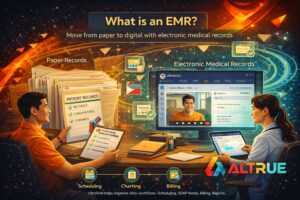
Paper charts in cabinets. Notes in notebooks. Prescriptions in pads. Scheduling in a separate log. Billing in another file. Everyone has “their own system,” and the clinic survives through sheer effort.
But effort doesn’t scale.
Care coordination EMR tools work best when the clinic has one place to confirm:
- who the patient is
- what happened last visit
- what the plan was
- what follow-up is expected
UltraVisit supports a connected workflow through scheduling and patient profiles and encounter documentation via SOAP notes. That makes it easier for the team to work from the same context, instead of rebuilding the story every time.
And yes, rebuilding the story wastes time. But worse, it increases mistakes.
Clinic coordination system habits improve when SOAP notes are actually easy to complete
Documentation is the engine of coordination. When documentation is delayed or incomplete, coordination becomes guesswork.
UltraVisit supports SOAP notes in seconds, which helps clinicians capture the encounter while it’s still fresh. That matters because coordination depends on clarity:
- what was assessed
- what was decided
- what happens next
When the note is timely, the next staff member doesn’t need to interrupt the clinician for “quick clarifications.” Fewer interruptions. Better flow. Less stress.
A practical clinic coordination system isn’t about making notes longer. It’s about making them usable.
FAQ: What makes SOAP notes support better care coordination?
SOAP notes support coordination when they are:
- consistent in structure
- completed close to the encounter
- easy to scan for plan and follow-up
UltraVisit supports faster SOAP notes so the record stays reliable even during busy clinic days.
Scheduling and patient profiles: coordination doesn’t happen if appointments are messy
Coordination starts before the patient arrives.
If your scheduling is unclear, the clinic runs on constant corrections:
- rescheduling chaos
- missed follow-ups
- double-booking tension
- walk-in overload
UltraVisit supports scheduling and patient profiles, helping staff keep appointments organized and patient context accessible. That’s not just admin convenience. It’s coordination.
When the schedule is steadier, clinicians can plan their day better. Patients feel guided instead of lost. And the clinic stops reacting every hour like it’s a surprise.
Patient engagement tools make care coordination feel smoother, not pushy
Care coordination isn’t only internal. Patients are part of the system. If the patient forgets the follow-up or doesn’t show up, the plan breaks.
UltraVisit supports patient engagement tools like:
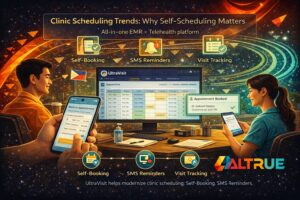
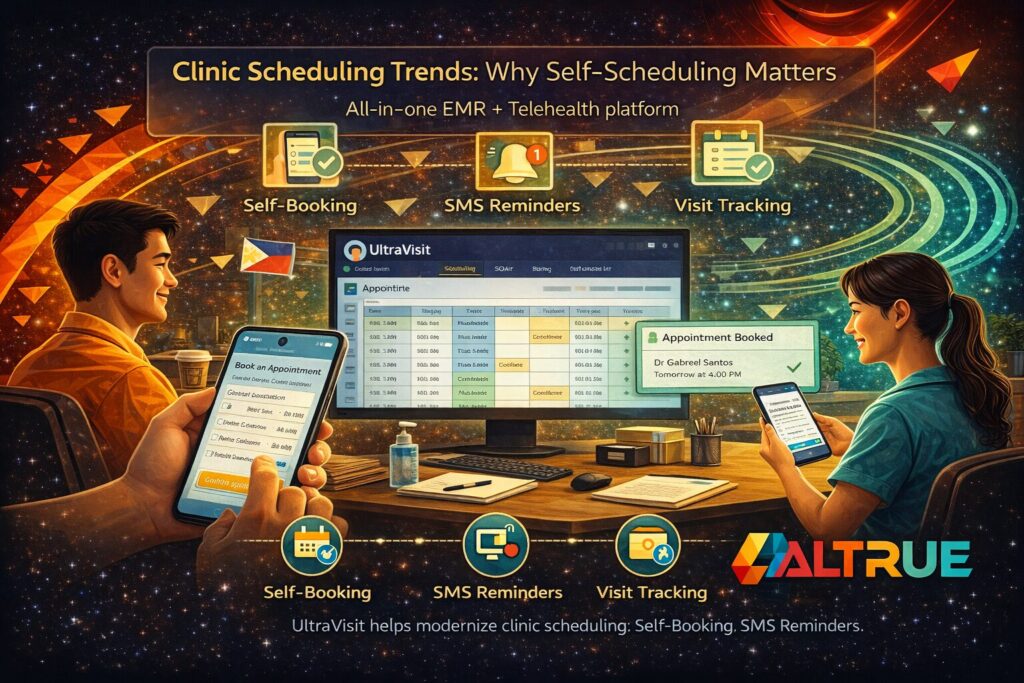
- self booking for patients
- reminders to reduce no shows
- follow up notes and repeat visit tracking
Those features help clinics keep continuity. A reminder isn’t just a reminder. It’s a signal that follow-up matters. It keeps the plan alive in the patient’s real world.
And honestly, patients want guidance. Most just don’t want to feel judged. There’s a difference.
FAQ: Do reminders really support care coordination?
They can, because fewer missed visits means the care plan stays on schedule. When follow-ups happen as planned, the clinic can track progress instead of restarting every time.
UltraVisit supports reminders and follow-up tracking as part of clinic workflow continuity.
Prescriptions you can print and save: coordination fails when medication details are fuzzy
Medication is one of the most common coordination pain points:
- patients forget the exact name
- staff can’t find the previous prescription
- follow-ups require adjustments but the record is incomplete
UltraVisit supports prescriptions you can print and save, which helps keep medication instructions tied to the patient record. That supports coordination because:
- staff can retrieve details quickly
- clinicians can reference prior prescriptions during follow-ups
- patients get consistent information
It sounds simple. But “simple” is exactly what prevents repeated confusion.
Billing and receipts for cash based clinics: coordination also includes operational clarity
Clinics are not only clinical. They also collect payments, issue receipts, and track income.
When billing is disconnected from the visit context, coordination suffers:
- staff rechecks what services were done
- receipt copies get lost
- questions later become stressful to answer
UltraVisit supports billing and receipts for cash based clinics, helping clinics keep operational records aligned with the visit workflow. That supports coordination because the clinic can respond confidently when questions come up, without creating extra paper trails.
And yes, less chasing means better service. Even if patients never say it, they feel it.
Reports for visits and income: coordination improves when leadership can see patterns
Care coordination is a daily process, but leadership needs visibility to maintain it.
UltraVisit supports reports for visits and income, which helps clinics track activity and operational patterns. Reports can support coordination by making it easier to spot:
- inconsistent follow-up scheduling
- attendance patterns linked to no-shows
- workflow bottlenecks tied to certain hours or visit types
Here’s a quick view of how reporting supports coordination:
| Coordination Need | What Gets Messy | What UltraVisit Supports |
|---|---|---|
| Continuity | scattered plans and follow-ups | follow-up tracking and SOAP notes |
| Attendance | missed appointments disrupt care | reminders and self booking |
| Visibility | leadership guesses patterns | reports for visits and income |
Three columns. No drama. Just operational clarity.
Teleconsult follow-ups: coordination is harder when telehealth notes are separate
Telehealth follow-ups are useful, but they create risk when documentation fragments across channels.
UltraVisit supports video teleconsult for follow ups and keeps follow-up notes connected to the patient record through repeat visit tracking. This supports care coordination by keeping the patient story continuous, whether the follow-up is virtual or in person.
A connected record reduces “start from scratch” visits. Patients feel remembered. Clinicians feel less rushed. The clinic feels more professional.
Privacy and access controls: coordination should not come at the cost of confidentiality
Coordination doesn’t mean everyone sees everything.
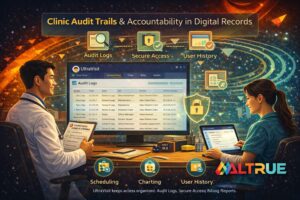
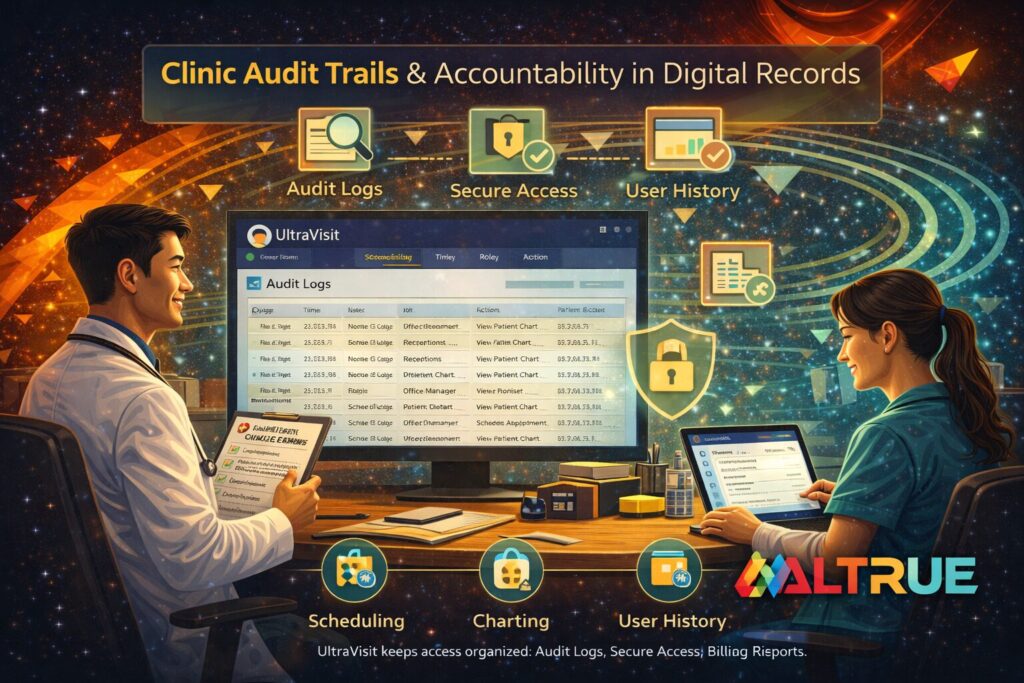
UltraVisit states it protects data in line with the Data Privacy Act of 2012 (RA 10173) and supports secure access controls for your team. That matters because healthy coordination requires boundaries:
- people access what they need to do their job
- sensitive information isn’t casually exposed
- patient trust stays intact
Good coordination is organized and respectful. Not open-season access.
Coordination feels like calm when the workflow supports it
The best clinics feel calm, even when they’re busy. Not because they’re less busy. Because they’re better organized.
UltraVisit, powered by Altrue, supports care coordination through connected tools for documentation, scheduling, patient engagement, billing, and reporting. When those tools work together, the clinic stops relying on memory and improvisation.
And that’s the real win. Less improvisation. More consistency. Patients notice. Staff feels it. You already know the rest.
If you want to explore how Altrue and UltraVisit can support care coordination EMR workflows in your clinic, connect with the team through this Contact Us page.