Chronic care isn’t hard because the medicine is complicated. It’s hard because life keeps interrupting the plan. Patients mean to come back. They really do. But then there’s work, traffic, school runs, family emergencies, payday errands, and that one week where everything goes sideways. Suddenly the “two-week follow-up” turns into “Doc, last time was… maybe two months ago?”
And your clinic? You’re left piecing things together. Old notes, half-remembered conversations, a prescription someone can’t find, and a patient who’s tired of repeating their story.
That’s why telehealth chronic care Philippines workflows matter. Not because telehealth is trendy. Because it helps you keep the follow-up thread from snapping when the real world gets noisy.
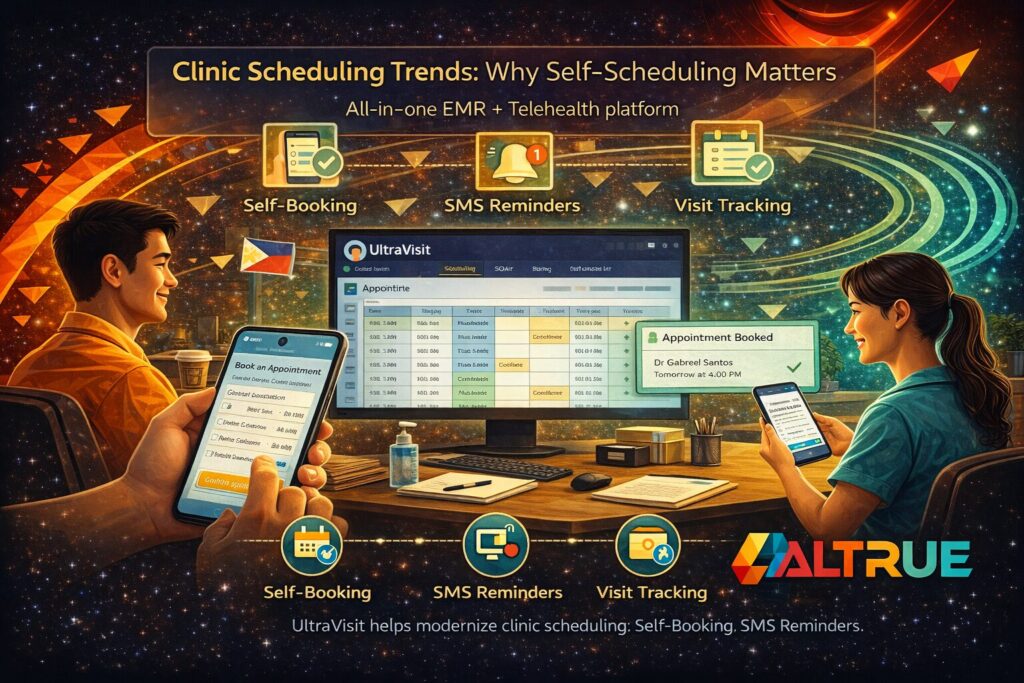
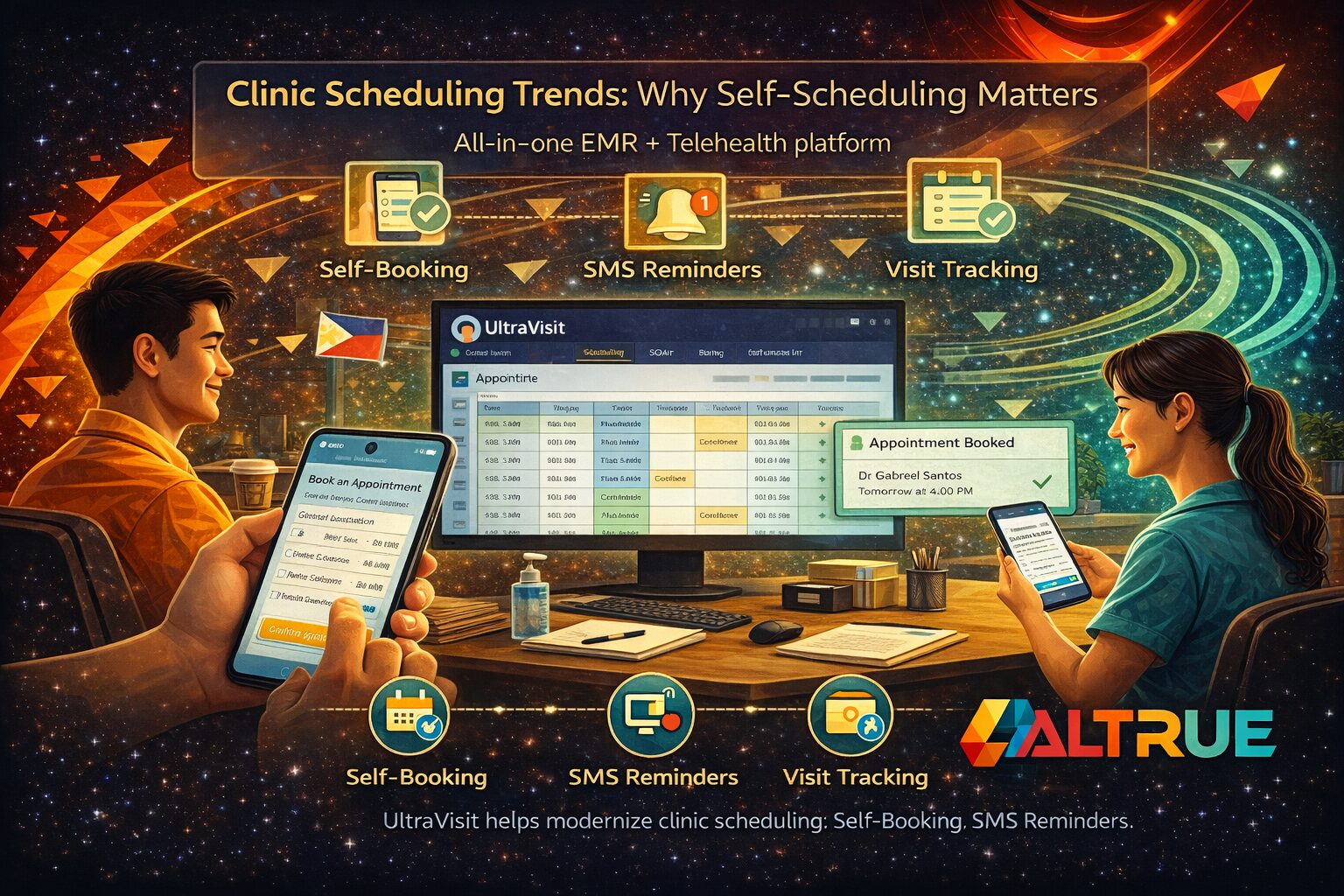
At Altrue, the focus is practical clinic impact, not fancy promises. UltraVisit is a Philippine-focused EMR + telehealth platform that supports smoother clinic workflows from scheduling to charting, billing, and teleconsult follow-ups. UltraVisit supports video teleconsult for follow ups, follow up notes and repeat visit tracking, self booking for patients, and reminders to reduce no shows. On the EMR side, it supports SOAP notes in seconds, prescriptions you can print and save, and scheduling and patient profiles.
So no, this isn’t a “guide” with perfect steps. It’s a realistic look at how clinics can make chronic follow-ups feel more steady, more doable, and a lot less chaotic.
Telehealth chronic care Philippines: the follow-up is the care
In chronic care, the first consult is the handshake. The follow-up is the relationship.
Because chronic conditions don’t resolve after one visit. They change. They flare. They settle. They react to sleep, stress, food, routine, and (let’s be honest) life habits that are hard to change.
Without consistent follow-ups, chronic care turns into a pattern you’ve probably seen:
- patient disappears after the first plan
- they return only when things get worse
- the clinic restarts the history-taking
- the plan gets rebuilt from scratch, again
That cycle drains everyone.
UltraVisit supports chronic care continuity by keeping telehealth follow-ups connected to the patient record, so the clinic can build on what came before. Patients feel that continuity. Even if they don’t say it out loud, it makes them more likely to stay engaged.
Video teleconsult for follow ups: convenience that actually protects continuity
A video teleconsult for follow ups can be a game-changer for chronic patients who don’t need a full in-person visit every time. It removes the “I can’t take a half-day off work” barrier. It lowers the friction that makes people postpone care.
But here’s the catch. If the teleconsult is treated like an informal call, continuity suffers. Notes get delayed. Details get lost. Follow-up plans get vague.
UltraVisit supports teleconsult follow-ups as part of the clinic workflow, which helps the teleconsult feel like what it is: a proper visit that deserves proper documentation.
And yes, when the clinic treats it seriously, the patient usually does too.
Follow up notes and repeat visit tracking: chronic care needs a running story
Chronic care is a series of small data points. One data point alone doesn’t say much. But when you stack them, patterns appear.
So the real question in follow-ups is almost always:
“What changed since the last visit?”
That includes:
- symptoms and their timing
- medication tolerance
- adherence and what got in the way
- lifestyle changes (or no changes, which is also information)
- new worries the patient didn’t mention last time
UltraVisit supports follow up notes and repeat visit tracking, which helps clinics keep a running story instead of a collection of disconnected visits.
Because when the story is clear, the plan becomes clearer. And when the plan is clearer, patients are less likely to drift.
FAQ: What should clinics track during chronic care follow-ups?
Most clinics get better continuity when they track:
- what changed since the previous visit
- whether the patient followed the plan, and why or why not
- symptom patterns and new concerns
- updated plan and exact follow-up timing
UltraVisit supports SOAP notes and repeat visit tracking so this information stays connected.
SOAP notes in seconds: the “later” problem is the real enemy
Let’s talk about the thing everyone does and nobody brags about.
“I’ll document it later.”
Later becomes after the next patient.
After the next patient becomes lunch.
Lunch becomes end of day.
End of day becomes “tomorrow.”
And tomorrow is where details go to die.
UltraVisit supports SOAP notes in seconds, which helps clinicians document quickly while the encounter is still clear. That’s huge for chronic care because the details are often subtle. A small symptom change. A dose adjustment. A side effect the patient finally admitted. You don’t want that living in your memory like a fragile sticky note.
Short SOAP notes can be excellent SOAP notes. They just need to be timely and consistent.
Self booking for patients and reminders to reduce no shows: keep the patient from drifting
Chronic care follow-ups don’t collapse because patients don’t care. They collapse because follow-ups are easy to postpone.
If booking is inconvenient, patients delay.
If the appointment is easy to forget, they miss it.
If they miss it, the plan weakens.
If the plan weakens, outcomes drift.
UltraVisit supports:
- self booking for patients
- reminders to reduce no shows
That pairing matters. Self booking makes action easier. Reminders keep the appointment from disappearing into the chaos of everyday life.
And yes, reminders can feel like the clinic is “watching.” But when the tone is supportive, it usually feels like care. Like, “Hey, we didn’t forget you.” That’s powerful.
FAQ: How do clinics reduce missed follow-ups in chronic care?
Clinics often reduce missed follow-ups by:
- making follow-up scheduling quick
- being clear about timing and purpose
- using reminders
- tracking repeat visits so continuity stays visible
UltraVisit supports self booking, reminders, and repeat visit tracking within one connected workflow.
Scheduling and patient profiles: chronic care follow-ups die when operations get messy
Chronic care is a long game. If your operations are messy, long games become exhausting.
When patient profiles are incomplete or hard to retrieve, staff end up asking the same intake questions repeatedly. Patients get irritated. Staff gets tired. The visit starts with friction instead of care.
UltraVisit supports scheduling and patient profiles, which helps clinics keep patient context accessible. That means:
- faster check-ins
- fewer repeated questions
- more time focused on the patient’s current issue
And that last part matters. Chronic care patients often feel like they’re “always explaining.” Reducing that repetition improves trust.
Prescriptions you can print and save: medication continuity is a follow-up multiplier
If you want chronic care follow-ups to work, medication clarity can’t be optional.
Patients forget names. They confuse doses. They lose papers. They ask for re-sends. They stop taking something because of side effects and don’t mention it until later.
UltraVisit supports prescriptions you can print and save, keeping medication instructions tied to the patient record. That supports chronic care because:
- clinicians can review the last prescription quickly
- follow-up decisions can build on accurate history
- staff can answer patient questions without guessing
And guessing in medication conversations? That’s not a vibe.
Reports for visits and income: visibility helps clinics plan chronic care capacity
Chronic care follow-ups create demand. If you can’t see demand clearly, you can’t plan for it.
UltraVisit supports reports for visits and income, helping clinics track activity and plan schedules. Even basic visibility helps you answer questions like:
- Are follow-ups dropping off?
- Which days are follow-up heavy?
- Are no-shows clustering around specific times?
You don’t need to become an analytics person. You just need a clearer picture than “it feels busy.”
Here’s the simple view:
| Chronic Care Need | What Often Breaks It | What UltraVisit Supports |
|---|---|---|
| Continuity | scattered notes and vague plans | SOAP notes and repeat tracking |
| Attendance | missed check-ins | reminders and self booking |
| Medication clarity | missing prescription history | saved printable prescriptions |
Privacy and trust: chronic care is personal, and patients know it
Chronic care patients aren’t only sharing symptoms. They’re sharing routines, habits, worries, and sometimes family context. It’s personal. It adds up over time.
UltraVisit states it protects data in line with the Data Privacy Act of 2012 (RA 10173) and supports secure access controls for your team. That matters because long-term care requires long-term trust. Patients have to feel safe returning, safe being honest, safe being messy about their lives.
Because life is messy.
Chronic care follow-ups feel lighter when the workflow stops fighting you
If your chronic care follow-ups require constant chasing, constant rebuilding, and constant apologizing for missing details, the clinic burns out. Patients burn out too.
A steadier workflow helps:
- follow-ups are easier to book
- visits are easier to document
- prescriptions are easier to retrieve
- progress is easier to track
- teleconsults feel like real care, not casual calls
UltraVisit, powered by Altrue, supports that steadiness in one connected platform built for real clinic operations in the Philippines. Not perfect. Just consistent. And consistency is what chronic care needs.
If you want to explore how Altrue and UltraVisit can support telehealth chronic care Philippines follow-up workflows for your clinic, connect with the team through this Contact Us page.