A website does not always break loudly.
Sometimes, it is just a form that stops sending messages. A page that loads slower than usual. A plugin update that quietly shifts the layout. A checkout button that works on desktop but acts strange on mobile.
Small things.
Until a customer notices first.
That is why web maintenance and uptime monitoring in the Philippines should not be treated as a “later na lang” task. If your website brings inquiries, bookings, sales, or trust, someone has to keep an eye on it.
Because launch day is not the finish line.
It is the start of the website doing real work.
Web Maintenance And Uptime Monitoring Keep Your Website Ready
Your website keeps working even after office hours.
People can visit during lunch break, after work, on weekends, or late at night while comparing options on their phone. If the site is down or broken, they will not know your hosting had an issue or an update caused a conflict.
They will only know the website did not work.
And usually, they will not message you to explain what happened.
They will leave.
A Website Needs Regular Checking
Web maintenance is the behind-the-scenes work that keeps your site usable.
It means checking if pages still load properly, forms still send, links still go to the right place, updates do not break anything, and the site stays secure enough for daily use.
Not exciting work, honestly.
But it matters.
One broken contact form can mean missed leads. One outdated plugin can open a security risk. One slow service page can make a visitor give up before reading what you offer.
Uptime Monitoring Helps Catch Problems Early
No business owner wants to hear, “Your website is down,” from a customer.
By then, the problem has already reached the wrong person.
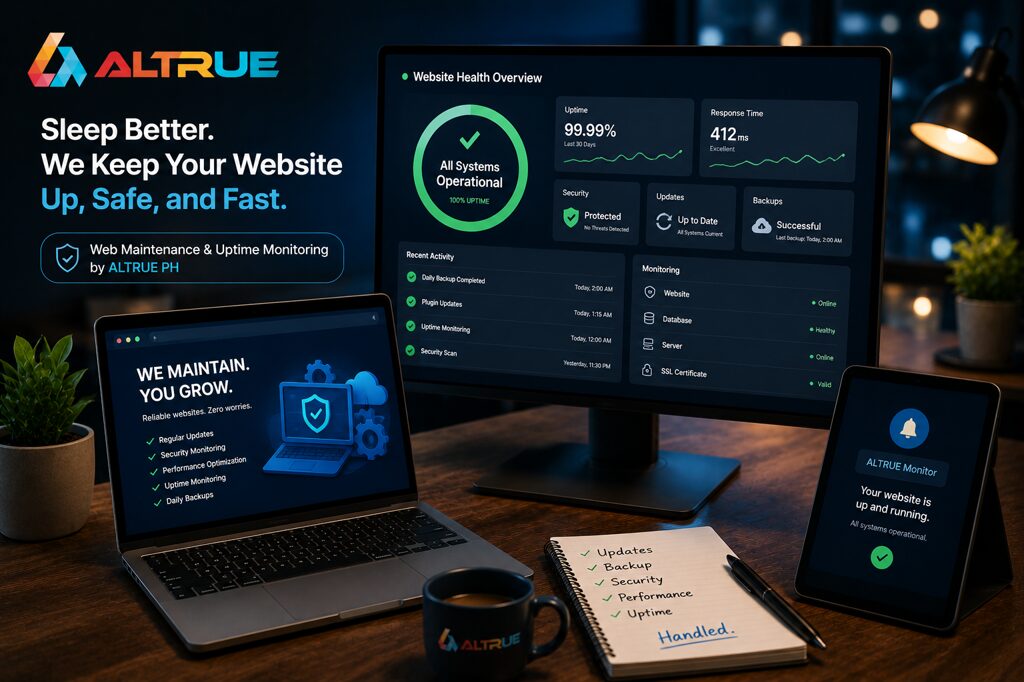
Uptime monitoring helps avoid that. It checks whether your website is available and alerts your team when something goes wrong. So instead of finding out hours later, you can respond sooner.
Downtime Can Damage Trust Fast
A website outage is not only a technical issue.
To a visitor, it can look like the business is inactive, careless, or not ready. That may not be fair, but online impressions happen quickly.
A potential client clicks your link.
Error page.
They close it.
Maybe they try again later. Maybe they do not.
That one failed visit can already be a lost inquiry.
Maintenance Protects The Website You Already Built
Many businesses spend time and budget building a website, then leave it alone once it goes live.
That is where problems usually begin.
A website has many moving parts. Hosting, themes, plugins, forms, images, databases, security settings, integrations, and content updates all need attention. When one part changes, another part can be affected.
Small Checks Prevent Bigger Headaches
Regular maintenance helps reduce problems such as:
- Contact forms not sending
- Slow loading pages
- Plugin conflicts
- Broken links
- Outdated website files
- Mobile display issues
- Missing backups
- Security weaknesses
- Failed integrations
- Unexpected downtime
These are the kinds of issues that look small until they happen during a campaign, product launch, hiring push, or busy sales week.
Then they become urgent.
Altrue PH Helps Keep Websites Working After Launch
Altrue PH understands that a website needs care after it goes live.
It has to stay useful for visitors, search engines, campaigns, inquiries, and customers. That means updates, monitoring, testing, and checking the small details people only notice when something goes wrong.
A Maintained Website Feels More Reliable
Most visitors will not say, “Wow, this website is maintained well.”
But they feel it.
Pages open properly. Buttons respond. Forms submit. Links work. Mobile pages look clean. Updates do not suddenly ruin the layout.
The website feels active.
Managed.
Trustworthy.
That matters whether you run a service business, online shop, booking page, company website, or lead generation site.
Sleep Better Knowing Someone Is Watching The Website
A website should not make your team wonder if it is still working.
Is the site online?
Are the forms sending messages?
Did the latest update break a page?
Is the site loading too slowly?
Did a customer try to contact us and fail?
Those questions are stressful when nobody is checking.
Web maintenance and uptime monitoring in the Philippines help businesses stay ahead of those issues. Not perfectly. No website is immune to problems. But with regular care and monitoring, issues are easier to catch before they become bigger.
Keep Your Website Ready For Real Visitors
Your website is often the first place people check before they trust your business.
So it needs to work when they arrive.
Not only during launch week. Not only when someone remembers to test it. It should stay ready for visitors, campaigns, search engines, inquiries, and customers.
Good maintenance is quiet work.
When everything runs well, nobody notices much.
That is exactly the point.
If your business wants a website that stays updated, monitored, and ready when customers need it, connect with ALTRUE PH through Contact Us.