Your website is usually the first staff member people meet.
It does not take lunch breaks. It does not sleep. It does not explain, “Sorry, our office is busy today.” It either helps a visitor understand your business, or it quietly lets that person walk away.
That is the uncomfortable part.
A website may look clean in a screenshot, but real users do not browse screenshots. They tap buttons. They wait for pages to load. They look for prices, services, proof, forms, contact details, and anything that tells them, “Yes, this business knows what it is doing.”
That is why web development in the Philippines should be built around real use, not just visual approval.
Web Development In The Philippines Should Feel Practical
A nice-looking homepage is good.
But it is not enough.
If the service page is confusing, the form does not submit, the mobile view feels cramped, or the page takes too long to load on mobile data, visitors will not stay and investigate like detectives.
They will leave.
Visitors Need Answers Fast
Most people visit a business website with a small checklist in their head.
What do you offer?
Can I trust you?
How do I contact you?
Is this worth my time?
Your website should answer those questions quickly. No guessing. No overdesigned maze. No tiny buttons hiding at the bottom of the page.
Good development makes the path easy.
Speed Matters More Than Businesses Think
In the Philippines, many users browse from phones, sometimes on mobile data, shared Wi-Fi, or older devices. That means a website cannot be built only for perfect office internet.
A slow website feels risky.
Not technically risky to the visitor, maybe. But emotionally? Yes. If the page lags, the business feels less reliable.
The Website Should Not Fight The User
A high-performing website loads smoothly, responds quickly, and lets people move without frustration.
That means images are optimized. Pages do not jump around while loading. Forms work. Buttons are easy to tap. Text is readable without zooming.
Simple things.
But simple things are often what separate a working website from a pretty problem.
A Business Website Should Have A Job
Some websites exist like digital posters.
They look fine. They say a few things. Then nothing happens.
A better website has a job. It brings inquiries. Explains services. Supports sales. Builds credibility. Helps people decide. Makes it easier for your team to receive the right information from the right customer.
Start With The Visitor’s Next Step
Before building or rebuilding a site, ask: what should the visitor do next?
Call? Send a message? Request a quote? Read more about a service? Book a consultation?
That answer should shape the layout, content, forms, and buttons.
If the next step is unclear, the website becomes decoration.
And businesses do not need more decoration. They need results.
Altrue PH Builds For After Launch
Launch day feels exciting.
Then real life begins.
Someone needs to update a service page. A visitor submits a form. Google crawls the site. A page needs editing. A new campaign needs a landing page. A mobile user checks the site at night and expects it to work.
Altrue PH develops websites with that reality in mind.
Strong Development Covers The Quiet Details
Good web development includes the things users notice only when they go wrong:
-
Fast loading pages
-
Mobile responsive layouts
-
Working contact forms
-
Clear navigation
-
Secure setup
-
SEO-ready structure
-
Easy content updates
-
Stable backend functionality
Not glamorous.
But necessary.
A website should not become another weekly problem for your team.
SEO Works Better When The Site Is Built Properly
A beautiful website is not much help if nobody finds it.
Search engines need structure. Users need clarity. Both benefit from clean headings, readable content, organized pages, fast loading, internal links, and proper technical setup.
That is why SEO and development should not be treated like separate jobs that meet each other at the end.
They should be planned together.
Build A Website People Can Actually Use
Web development in the Philippines should give businesses more than a polished homepage.
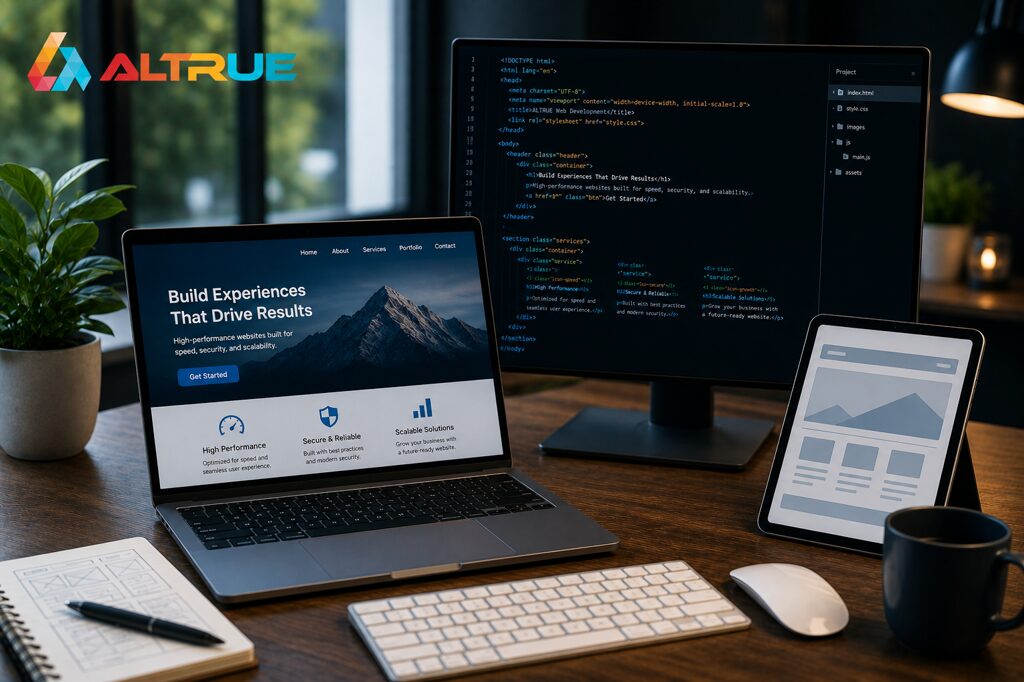
It should create a website that works on real devices, loads fast enough for real users, explains the business clearly, supports search visibility, and helps turn visitors into inquiries.
The best website is not the one that only looks impressive on launch day.
It is the one that keeps doing its job after everyone stops clapping.
If your business is ready to build a faster, clearer, and more reliable website, connect with ALTRUE PH through Contact Us.